


Software testers use several techniques and tools for software testing in the software development industry. These software testing tools ensure that the final product is of good quality and reliable. Among these techniques, the modern-day testers use smoke testing as one of the most critical initial steps to pinpoint major problems in the early life cycle. However, what exactly is smoke testing, and why is it so critical?
What is Smoke Testing ?
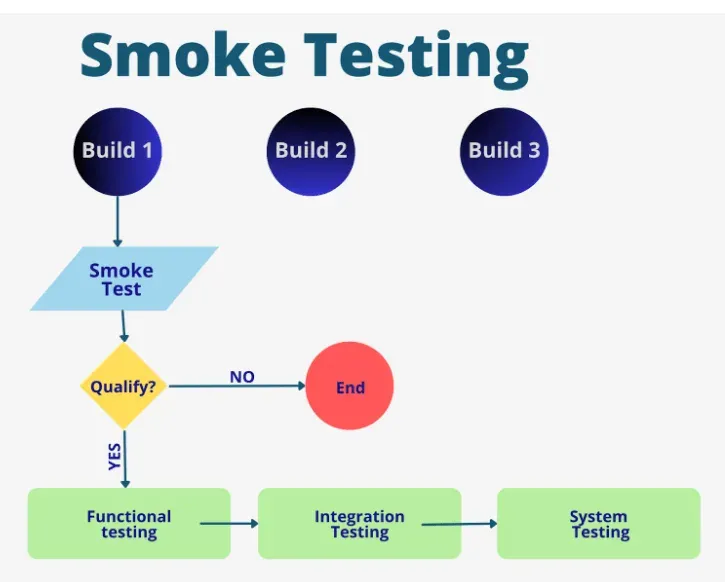
Smoke testing, also referred to as “build verification testing,” is a type of software testing applied to verify that the most critical features of a program function as expected. A tester will only test the most basic characteristics, overlooking any more detailed information to take a very broad and general approach.
The term “smoke testing” originated from hardware testing, whereby a device is turned on to observe if smoke comes out, thereby indicating a serious issue. Similarly, with software, it is evident, if the main functionality breaks during smoke testing, that the build is unstable and further testing is needless until these significant problems are resolved.
Key Features of Smoke Testing
Preemptive and exploratory: Developers can use Smoke testing for advanced tests that check if the software’s key features work. They ascertain that the important ones work but do not get into details of the same.
Board but Shallow: The testing approach covers a lot of functionality superficially to ensure that all bases are touched but without the fine details.
Fast and Efficient: The objective of smoke testing is to be completed as quickly as possible. They help to determine if a build is sturdy enough to take more extensive testing.
Manual vs Automatic: As is often the case with the CI/CD pipeline, smoke testing can be done either manually or automatically.
Regular Execution: Smoke tests are run frequently, mostly on every new build availability, to ensure that the newly added code does not cause a problem with the features already existing.
Types of Smoke Testing
There are numerous types of smoke testing, all with their own specific functions and appropriateness for a different phase of the software development life cycle. The two chief forms of smoke testing are as follows:
Automated Smoke Testing
Smoke Testing conducted by automation testing tools is called automated smoke testing. This really comes in handy when one wants to quickly check on the reliability of builds, like in the CI/CD pipeline.
Use Case: Continuous Integration/Continuous Delivery setups that require frequent testing and quick response.
Manual Smoke Test
Testers can conduct Manual smoke testing by themselves through manual running of pre-written test cases. In many instances, testers conduct it when automated testing is not practical, for example, at the very early phases of development or in environments without automation infrastructure.
Use Case:
small-scale or early-stage initiatives that do not yet use automation.
Hybrid Smoke Testing
Hybrid Smoke Testing uses the best features of both manual and automated methods. Thus hybrid smoke testing is Efficient and flexible. It’s maintained in this approach while ensuring a high level of coverage.
Use Case:
Testing projects that require the in-depth insights possibly afforded by human testing, yet the speed at which automated testing can work.
Importance of Smoke Testing
Early Problem Identification: Smoke testing helps in the early identification of key issues by confirming the major capabilities. It saves time and resources in the long term.
Cost-Effective: It is always less costly to fix a problem detected during smoke testing compared to a stage further in the development cycle.
Boost of Confidence: A successful smoke test gives the development and QA teams more confidence that the build is stable and that it makes sense to proceed with further testing.
Streamlines Development Process: It ensures that only stable builds go to further testing, which reduces the effort that is strictly required and streamlines the development and testing process.
Conclusion
It is a technique, therefore, essentially required to protect software development from a perhaps catastrophic error. Smoke testing helps maintain the stability and dependability of the builds by verifying some of the major capabilities in a software application. The tests work as designed, which finally gives better quality software products. Ease and effectiveness, coupled with being a best practice, are reasons development teams can’t afford to ignore smoke testing. You can do the testing both manually or automatically within the CI/CD pipelines.
Call to Action
Ready to take your software quality to the next level? Contact us at PrimeQA Solutions for expert selenium automation testing and performance testing with JMeter. Our experienced team is here to help you achieve seamless and efficient testing outcomes. Get in touch today to start your journey towards flawless software performance!